
18650 lithium battery charging protection board 5V USB input with 4.2V ±1% charge cutoff, 1000mA charging current and 3A overcurrent protection in blue PCB measuring 2.6x1.7 cm


18650 lithium battery charging protection board 5V USB input with 4.2V ±1% charge cutoff, 1000mA charging current and 3A overcurrent protection in blue PCB measuring 2.6x1.7 cm
18650 Lithium Battery Charging Protection Board with 5V USB Input and 3A Overcurrent Protection

This integrated board combines the essential functions needed to safely charge and protect a single 18650 lithium-ion battery cell, using a readily available 5V USB power source. It eliminates the need for separate charging circuits and protection modules in DIY electronics, portable power banks, or repair projects. The board manages the precise charging cycle required by lithium chemistry, automatically cutting off at 4.2V ±1%, while guarding against common battery failures like excessive discharge and short circuits. Its small 2.6 cm by 1.7 cm form factor and simple interface make it a practical component for hobbyists and makers looking to add managed battery power to their creations.
Features and Construction
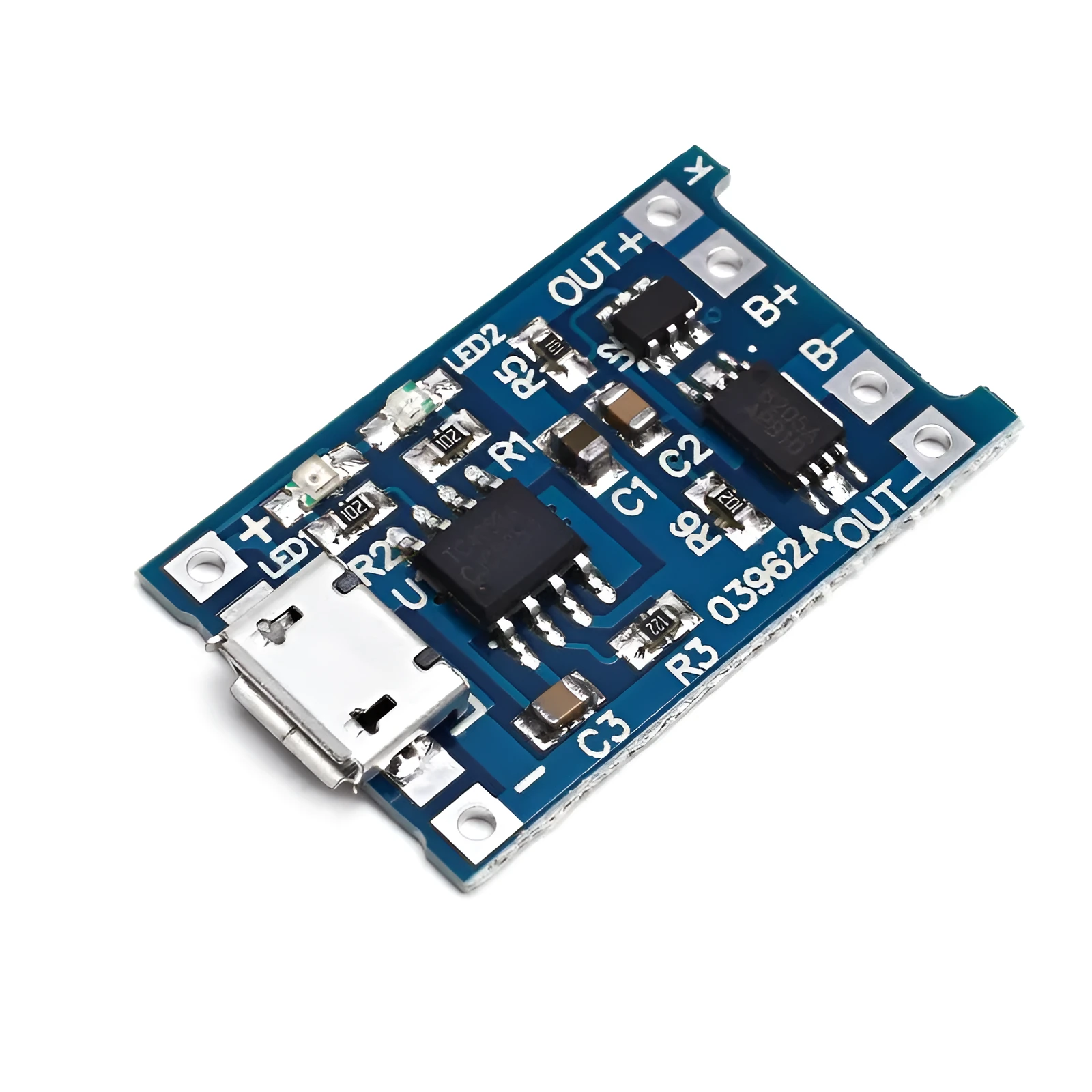
The board is built around a single printed circuit board that hosts the integrated charging IC and protection circuitry. Its design focuses on delivering the core electrical functions—voltage regulation, current control, and safety monitoring—in a minimal footprint. The components are selected to handle the specified 1000mA charging current and 3A protection threshold, providing a reliable foundation for your battery-powered application without unnecessary bulk.
Material and Build
The core component is a standard fibreglass printed circuit board (PCB), which provides the physical structure and electrical pathways for the surface-mounted integrated circuits and passive components. The board is finished in a blue solder mask, a common colour that aids visual inspection of solder joints and component placement. This construction is typical for electronic modules of this type, prioritising electrical reliability and ease of soldering over decorative finishes.
Size and Practical Fit
With dimensions of precisely 2.6 cm in length and 1.7 cm in width, the board is designed for integration into spaces where every millimetre counts. This compact size allows it to be fitted inside modified battery compartments, custom 3D-printed enclosures for power banks, or alongside other electronics in a project box. The small footprint means it adds minimal volume to the final assembly, helping maintain a sleek profile in portable devices.
Uses and Placement

This board serves as a central component in any project requiring a single rechargeable 18650 lithium cell. Its predefined parameters—5V input, 1000mA charge rate, and specific protection thresholds—define its ideal applications. It is best placed directly between your USB power input and the positive and negative terminals of the 18650 cell, often requiring short wire connections to keep the assembly neat and electrically efficient.
Event or Professional Use
For professional prototyping, repair work, or small-batch production, this board offers a tested and predictable solution. Engineers or technicians can incorporate it into custom test equipment, emergency lighting backups, or specialised handheld tools where off-the-shelf battery packs are unsuitable. Its known specifications allow for accurate system design, and its protection features reduce the risk of lithium cell failure in field-deployed equipment.
Everyday Home Use
For DIY enthusiasts and makers, this board is ideal for reviving old cordless devices, building custom power banks for phones or camping lights, or creating bespoke battery-powered garden lights. By providing a safe charging interface from any USB port—like a wall adapter, power bank, or computer—it makes working with powerful 18650 cells more accessible. Users can upgrade devices from disposable batteries to rechargeable ones or create portable power solutions tailored to their specific needs.
Benefits and Buying Value

The primary value of this integrated board lies in its combination of functionality, safety, and space efficiency. It consolidates what would typically require two separate modules into one reliable unit, simplifying wiring and saving space in the final assembly. By including critical protection circuits, it helps extend the functional life of the often-expensive 18650 cell it manages, guarding against the deep discharges and overloads that can permanently damage lithium batteries.
Reuse and Low Maintenance
Once integrated into a project, the board requires no ongoing maintenance or calibration. It performs its charging and protection functions automatically each time the device is plugged into USB power or used. This set-and-forget operation makes the end product more reliable and user-friendly. Furthermore, the board itself is a durable electronic component with no moving parts, meaning it can potentially be desoldered and reused in future projects if the original device is disassembled.
Why Choose This Product
This board is chosen for its clear specification match: if your project uses one 18650 cell, is charged via 5V USB, and needs the stated 1000mA/3A protection levels, this module provides a ready-made solution. It removes the complexity of designing these circuits from scratch, saving time and reducing the risk of error for anyone not specialised in lithium battery management. The compact size is a decisive advantage over larger, bulkier modules when building small portable devices.